

 Türkçe
 Deutsch
 Русский
 Français
Many people living with Alzheimer’s disease or another form of dementia go through phases in which they undress unexpectedly or remove continence aids. For the person this can mean cold, skin problems and a loss of dignity; for caregivers it means repeated changes of clothing and bedding, often at night. Specially designed dementia care overalls can help in these situations. This guide explains how they work, when they are appropriate and what to look for when choosing them for a care home or home-care service.
Why undressing happens
Undressing is rarely a random act. It can be a response to discomfort – heat, an itchy label, a wet continence pad, pain or the need to use the toilet – or to confusion about time and place. The first step is always to look for and address the cause. Clothing is one tool among several, not a replacement for good care.
How dementia care overalls work
Dementia care overalls are one-piece garments that look like ordinary nightwear or loungewear but close with zippers placed out of the wearer’s reach:
- A hidden back zipper runs from the neck to the hip, so the overall can only be opened by a caregiver.
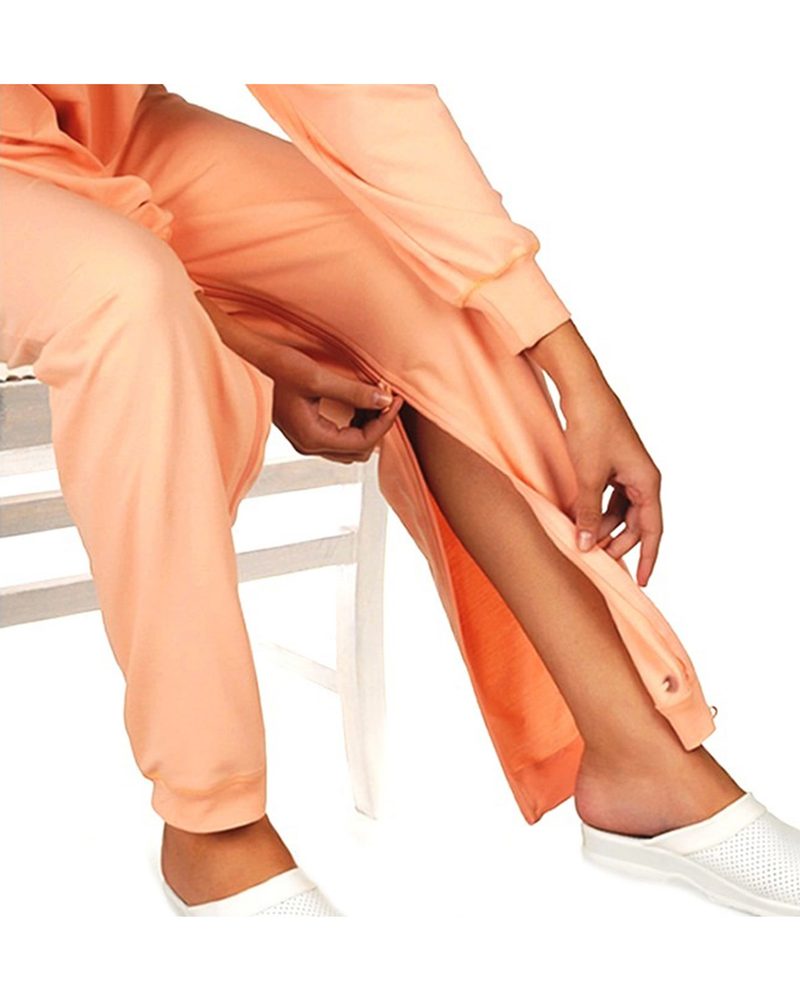
- A separable leg zipper opens the garment between the legs and along the legs, giving access for continence care and skin checks without fully undressing the person.
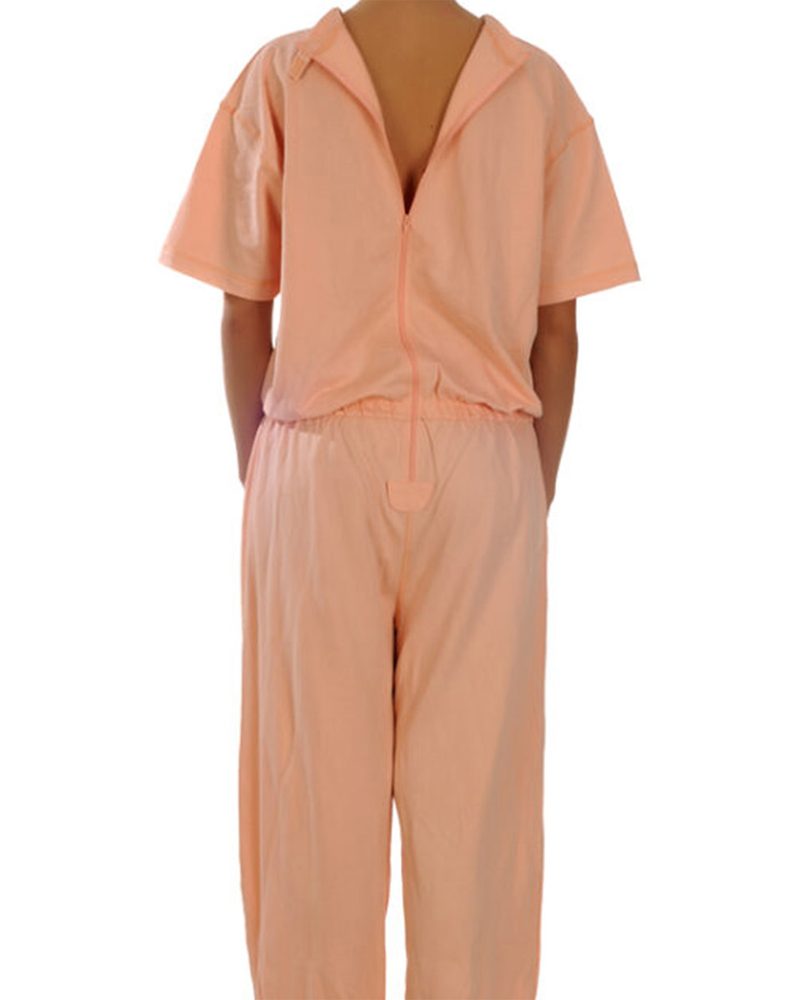
The result is a garment that stays on during the day and night while caregivers can still carry out personal care quickly and respectfully.
Using them in a person-centred way
Because these overalls limit how easily a person can undress, they should be used thoughtfully and in line with local rules on restrictive practices. Good practice includes:
- Using them only when there is a clear reason documented in the care plan, such as repeated removal of continence aids leading to skin damage.
- Involving the person, their family or legal representative in the decision wherever possible.
- Choosing the least restrictive option that meets the need, and reviewing the decision regularly.
- Keeping the person’s own style: colours, necklines and sleeve lengths that feel like their own clothes.
What to look for when buying
- Zipper placement and quality. Zippers must be truly out of reach and smooth enough for caregivers to use quickly.
- Access for care. Leg and crotch openings should allow continence care and skin checks without removing the garment.
- Fabric. Soft, breathable cotton reduces sweating and skin irritation; dermatological testing and OEKO-TEX certification are a plus.
- Size range. A wide range, ideally XS to 5XL, makes sure the garment fits without pulling at the zippers.
- Choice of styles. Different necklines, sleeve and leg lengths for day and night use help preserve the person’s identity.
- Laundering. The garment must survive frequent washing in a care home laundry.
Example: Caretex Day & Night Overalls
The Caretex Day & Night Overalls by Gentuğ Textile are made from soft, breathable 100% cotton and come in 20 models for women and men, with V-neck, crew neck or polo collar and long or short sleeves and legs. They are available in sizes XS to 5XL and in 10 colours, are dermatologically tested, hypoallergenic, OEKO-TEX Standard 100 certified and machine washable at 40 °C. Depending on the model, they close with a hidden back zipper, a separable leg zipper or both.
For continence care, they can be combined with our washable ABSO underpads. Our textile solutions for care homes show the full range.
Care homes, home-care providers and distributors: contact us for the model catalogue, size charts and samples.
FAQ
Are dementia care overalls a form of restraint?
They can limit how easily a person undresses, so many care settings treat them as a restrictive measure. They should be used only for a documented reason, as the least restrictive option and with regular review.
Can the overalls be worn during the day?
Yes. Models with different necklines, sleeve and leg lengths are designed to be comfortable for sleep and neat enough for daytime wear.
Do the overalls make continence care harder?
No. Separable leg zippers give caregivers direct access for changing continence aids and checking the skin without removing the whole garment.