

 Türkçe
 Deutsch
 Русский
 Français
After an earthquake, a flood or a winter storm, people often spend nights in tents, sports halls or open shelters. Keeping them warm and dry is one of the first priorities of any response – and one of the hardest to plan for, because blankets have to be bought, stored and distributed in large numbers before they are needed. This guide compares the main types of emergency blankets and lists what procurement teams at relief organisations, municipalities, hospitals and distributors should check.
Three types of emergency blanket
| Type | Strengths | Limitations |
|---|---|---|
| Foil rescue blanket | Very light and compact, low unit cost, reflects body heat | Single use, tears easily, no cushioning, uncomfortable for longer stays |
| Wool or fleece blanket | Warm and comfortable, familiar to users | Absorbs water, heavy when wet, slow to dry, no wind protection |
| Waterproof textile thermal blanket | Warm, wind- and waterproof, reusable and washable | Higher unit cost and storage volume than foil |
Foil blankets are ideal for first aid and short-term exposure. For shelters, camps and longer deployments, a reusable blanket that stays warm when the ground is wet and the wind is blowing usually offers better value per night of use.
What to check before buying
- Water and wind protection. A waterproof layer keeps rain, snow and ground moisture out, which matters most in tents and outdoor shelters.
- Breathability. A blanket that is waterproof but not breathable traps body moisture and becomes damp inside. Look for a breathable membrane.
- Weight and warmth. Heavier fabrics are warmer but take more storage and transport space. Choosing two weights for different climates and seasons is a common approach.
- Size. A double size can cover two children or one adult with room to wrap around.
- Washability. Blankets used in shelters must be laundered before reissue. High-temperature washing makes it possible to redeploy stock instead of discarding it.
- Durability. Edge binding and seam quality decide whether a blanket survives repeated distribution, use and washing.
- Colour. Darker or neutral colours such as grey or beige hide dirt better in field conditions.
- Supply capacity. Ask about lead times for large orders and whether the fabric is available as roll goods for local conversion.
Example: Caretex Thermo Blanket
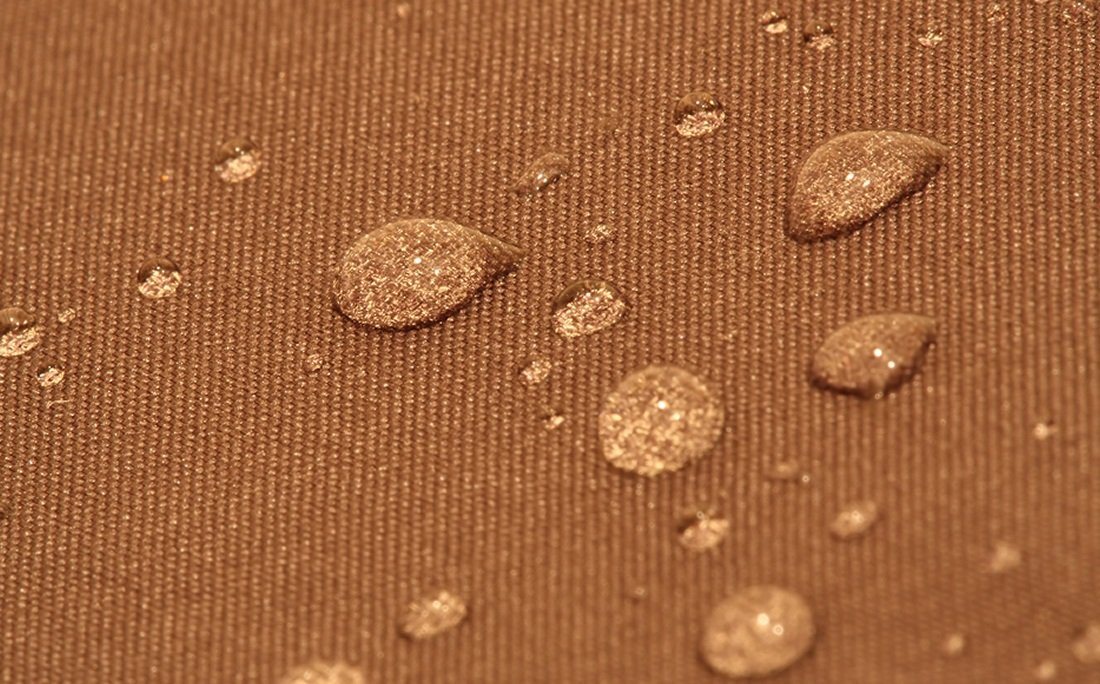
The Caretex Thermo Blanket by Gentuğ Textile is a three-layer protection blanket. Both faces are soft, water-repellent microfiber, and the breathable, waterproof polyurethane layer between them blocks rain, snow and wind while letting body moisture escape as vapour.
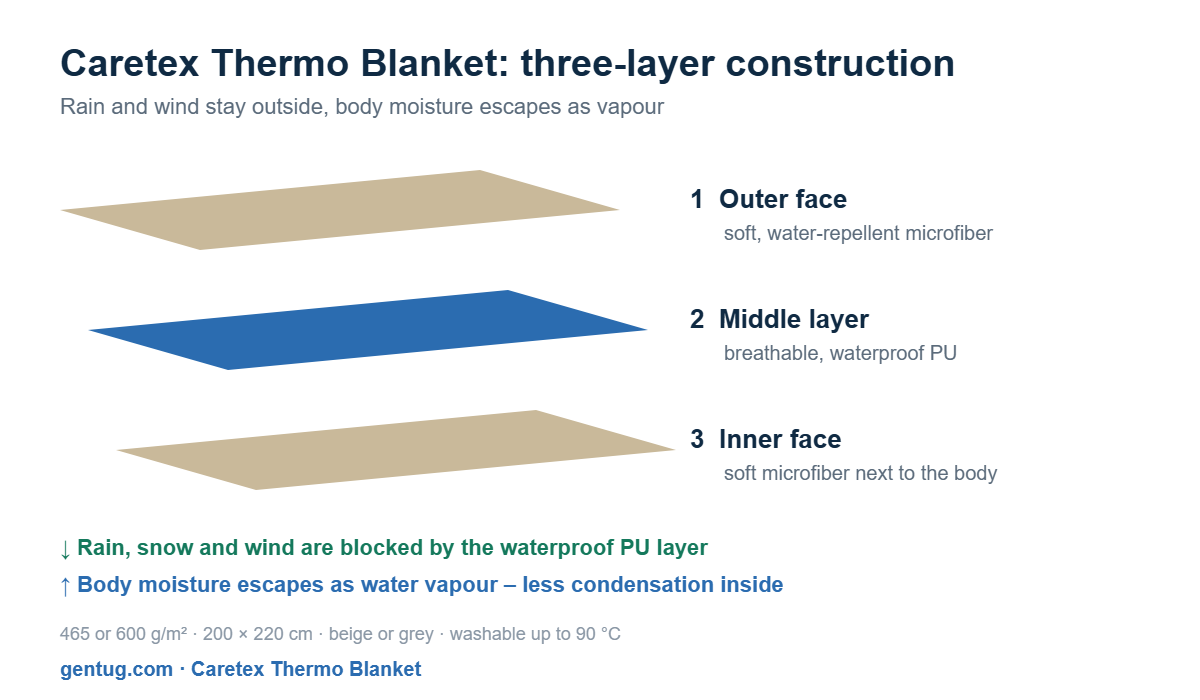
It is made in the standard double size of 200 × 220 cm, in two weights (465 and 600 g/m²) and in beige or grey. The blanket is finished with a stitched edge binding and can be washed at up to 90 °C, so it can be cleaned and reissued many times. Gentuğ also supplies the Thermo Blanket fabric as roll goods for converters.
All specifications are on the Thermo Blanket technical details page. Our hospital textiles overview shows further reusable products for healthcare and emergency settings.
Relief organisations, public procurement teams and distributors: contact us for samples, large-volume quotes and roll goods.
FAQ
Are foil emergency blankets enough for disaster shelters?
They are useful for first aid and short-term exposure, but they tear easily and are designed for single use. For nights in tents or shelters, reusable waterproof textile blankets are usually more comfortable and durable.
Why does breathability matter in a waterproof blanket?
Without breathability, body moisture condenses inside the blanket and the user becomes damp and cold. A breathable waterproof layer keeps rain out while letting vapour escape.
Can emergency blankets be washed and reused?
Textile thermal blankets can. The Caretex Thermo Blanket is washable at up to 90 °C, so stock can be cleaned and redistributed.