

 Türkçe
 Deutsch
 Русский
 Français
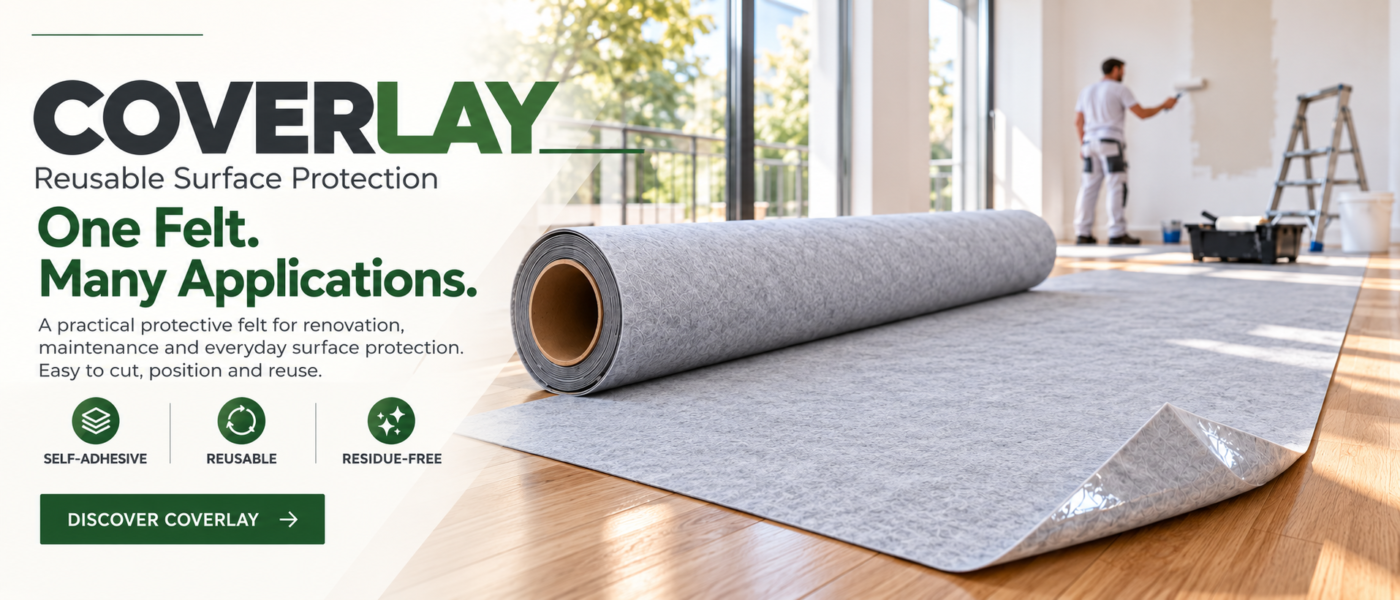
Finished floors are among the most expensive surfaces on a job site, and they are usually installed before painters, electricians, kitchen fitters and cleaners have finished their work. A single dropped tool, a dragged ladder or a paint spill can mean a costly repair before handover. That is why choosing the right temporary floor protection matters as much as the floor itself. This guide compares the most common options and explains what to check for sensitive and underfloor-heated floors.
What temporary floor protection has to do
- Stay in place – a cover that slips or curls up becomes a trip hazard and leaves the floor exposed.
- Absorb impacts from tools, dropped objects and heavy foot traffic.
- Keep liquids away from the floor – paint, plaster water, cleaning fluids.
- Come off cleanly without leaving adhesive film or marks.
- Suit the floor – parquet, stone, LVT, carpet, stairs and floors with underfloor heating all behave differently.
- Make sense economically – single-use materials are cheap per roll but have to be bought and disposed of on every project.
The main options compared
| Option | Strengths | Typical weak points |
|---|---|---|
| Single-use PE film | Low cost, keeps dust and liquids off | Little impact protection, can be slippery, adhesive films may leave residue, thrown away after one job |
| Cardboard and paper | Cheap, some impact protection | Softens or tears when wet, has to be taped, shifts at the edges |
| Loose covers and drop cloths | Reusable, absorbent | Slide and wrinkle underfoot, need tape on stairs, liquids can soak through |
| Felt underlay or loose felt | Good cushioning | Not designed to stay in place or act as a liquid barrier |
| Self-adhesive protection fleece | Stays in place without tape, cushions impacts, coated underside blocks liquids, can be reused | Quality varies: some products must be tested first, can leave marks or require underfloor heating to be switched off |
Why self-adhesive fleece is replacing film and board
A self-adhesive protection fleece combines a felt or nonwoven top layer with a coated, slightly tacky underside. It is rolled out and pressed into place, holds without tape, takes the hits on site and is rolled up again afterwards. On stairs, in corridors and on large open floors it removes the two biggest problems of film and board: slipping and tearing.
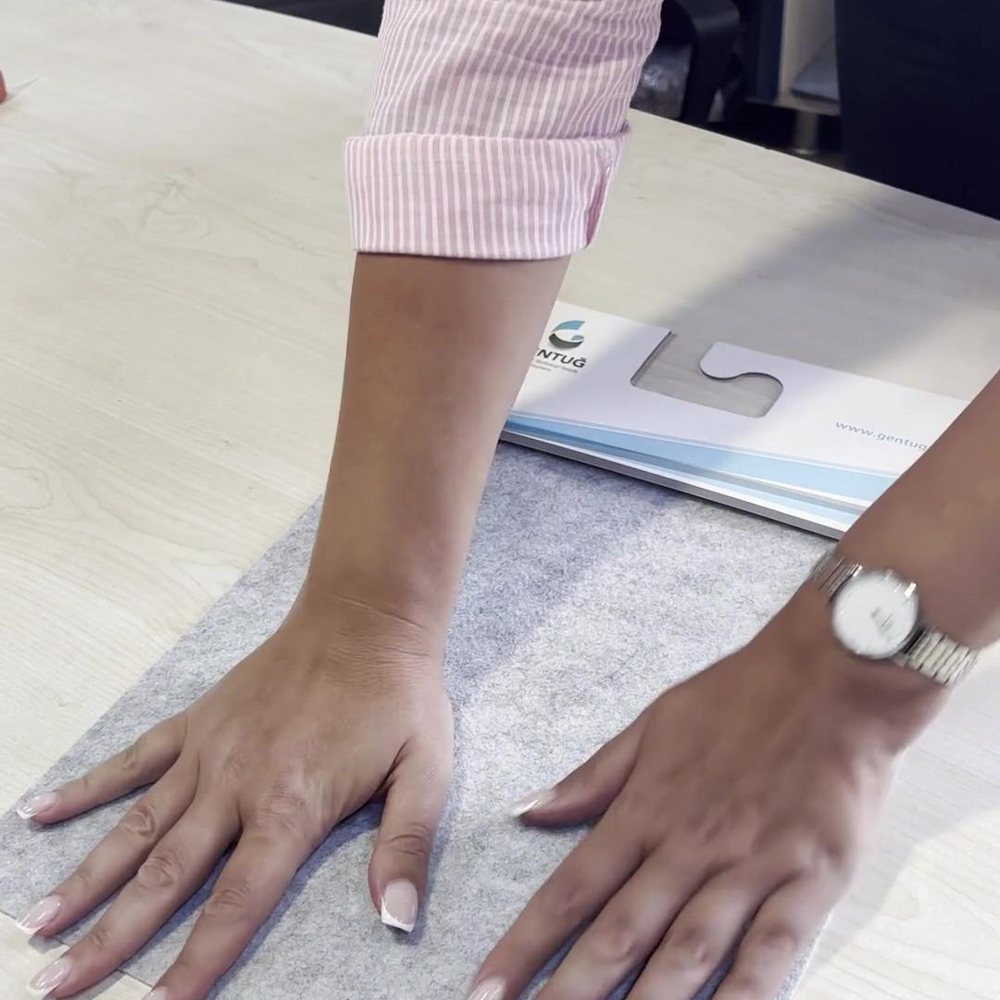
Not every fleece performs the same, however. Before you choose one, check the points below.
What to check before you buy a protection fleece
- Does it leave marks? Ask whether the grip comes from a separate glue layer or from the coating itself. Products with a glue layer are more likely to transfer adhesive to the floor.
- Can it be used on underfloor heating? Some fleeces require the heating to be switched off before they are laid. If you work in heated buildings, make sure the product is suitable for underfloor-heated floors.
- Is it suitable for the floor’s condition? No protection fleece should go on a floor that is still curing. Wait until fresh screed, varnish or newly laid parquet is ready for covering.
- How heavy and how strong is it? Weight (g/m²), tensile and tear strength and abrasion resistance show how well the fleece stands up to site traffic.
- Does it stop liquids? A coated underside with a stated hydrostatic resistance keeps spills away from the floor.
- How often can it be reused? Reuse only pays off if the grip lasts from one site to the next.
- Is it certified? OEKO-TEX® Standard 100 confirms the textile has been tested for harmful substances.
Underfloor heating and sensitive floors
Underfloor heating is now common in new homes, hotels and offices, and the heated floor is often already in use while interior work continues. A protection product that requires the heating to be switched off, or that might leave marks on a warm floor, adds a planning risk to every job. For parquet, natural stone, LVT and other sensitive finishes, choose a fleece that is explicitly suitable for underfloor heating and leaves no marks when it is removed.
Eco Coverlay: self-adhesive floor protection from Gentuğ Textile
Eco Coverlay is a self-adhesive floor protection fleece manufactured by Gentuğ Textile. Its needled felt top layer is made with 57% recycled PES and cushions the floor against tools, dropped objects and foot traffic. The underside is a thermoplastic coating whose tack comes from the coating itself – there is no separate glue layer.
- No marks on any floor – for special coatings, contact us.
- Suitable for underfloor-heated floors.
- Reusable many times – the self-adhesive property does not wear off.
- Liquid barrier – min. 0.2 bar hydrostatic resistance (EN ISO 811).
- Built for site use – Eco Coverlay 265: min. 280 N/5 cm tensile strength (weft) and 40,000 Martindale cycles abrasion resistance.
- Four weights from 195 to 340 g/m², widths from 100 to 220 cm, OEKO-TEX® Standard 100 certified.
Eco Coverlay is not intended for freshly laid or curing floors such as fresh screed, new varnish or newly installed parquet.
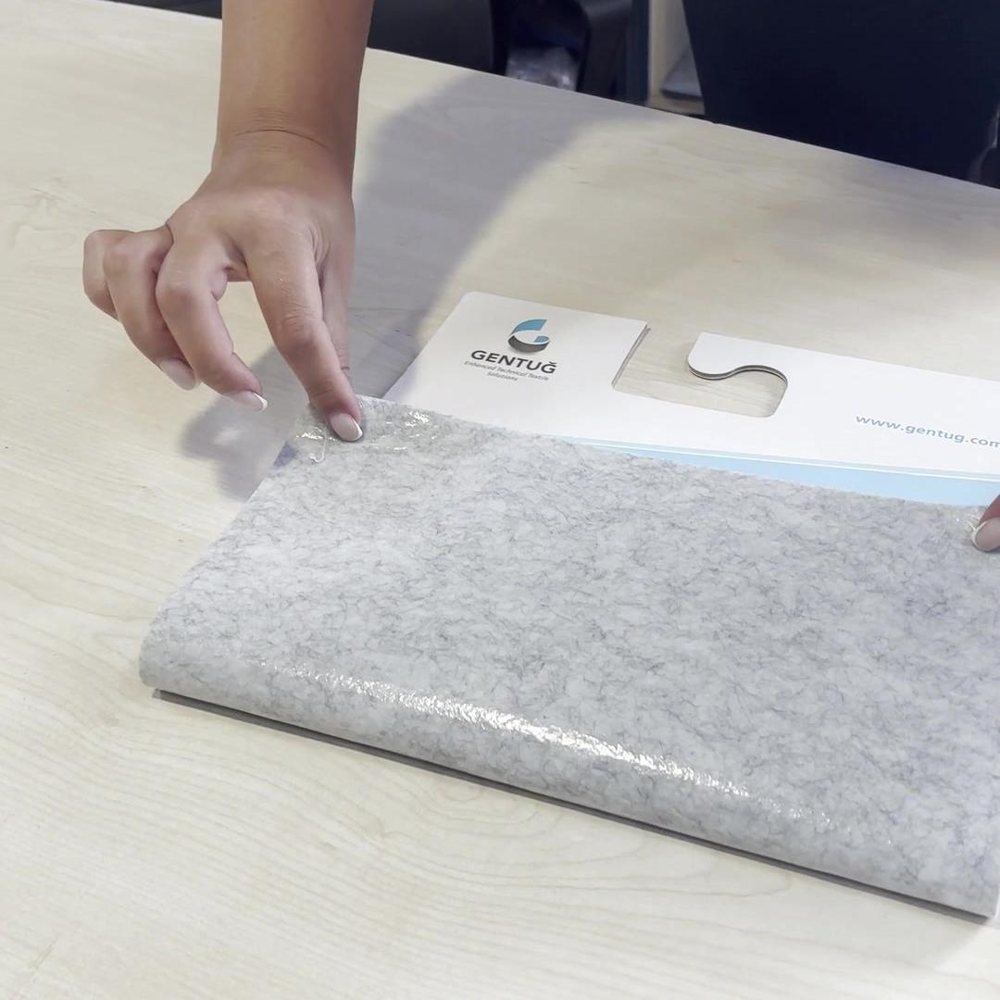
Contractors, distributors and trade show builders: contact us for samples, the technical data sheet and private label supply.
FAQ
What is the best temporary floor protection for renovation work?
For finished floors that need impact protection and grip, a self-adhesive protection fleece is usually the most practical choice: it stays in place without tape, cushions impacts and can be reused. Film and cardboard are cheaper per roll but slip, tear or soak through more easily.
Can floor protection be used on underfloor heating?
It depends on the product. Some protection fleeces require the heating to be switched off. Eco Coverlay can be used on underfloor-heated floors.
Does self-adhesive floor protection leave marks?
Some products can, especially those with a separate glue layer. Eco Coverlay’s grip comes from its thermoplastic coating, and it leaves no marks on any floor. For special coatings, contact us.
When should floor protection not be used?
Do not cover floors that are still curing – fresh screed, new varnish or newly laid parquet – until they are ready for covering.