

 Türkçe
 Deutsch
 Русский
 Français
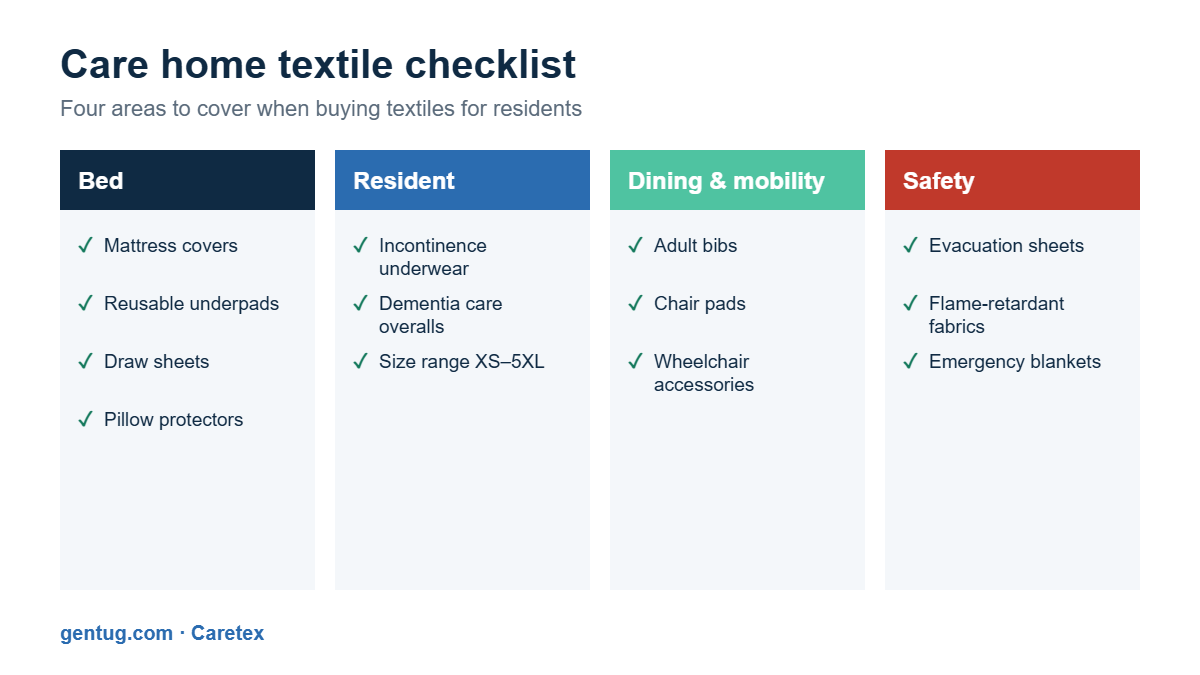
Textiles are one of the largest recurring purchases in a care home – and one of the most visible to residents and families. Bed protection, clothing, dining aids and safety textiles all have to work together, survive constant laundering and support dignity. This care home textiles checklist walks through the four areas procurement teams should cover and links to our detailed guides for each.
1. The bed
The bed is where residents spend the most time and where most textile costs arise.
- Mattress covers: fluid-proof, breathable and resistant to the disinfectants in your cleaning plan. Our guide on mattress cover disinfectant resistance explains what to check; for routine care home use, EasyWipe is designed for 90 °C washing.
- Underpads: reusable underpads often cost less per year than disposables. See our annual cost comparison and the ABSO underpad range.
- Draw sheets: help staff reposition residents and protect the bed linen. See our draw sheets.
- Pillow protectors matching the mattress covers complete the bed.
2. Resident clothing
- Continence care: washable incontinence underwear suits residents with light to moderate leakage and preserves a normal look. Read absorbency levels explained.
- Dementia care: overalls with hidden zippers can help when residents repeatedly undress or remove continence aids – used in a person-centred way. Read our dementia care overalls guide.
- Fit: a wide size range, ideally XS to 5XL, avoids leaks and discomfort.
3. Dining and mobility
- Adult bibs protect clothing at mealtimes and reduce laundry; choose designs that look like clothing rather than baby bibs. See our adult bibs.
- Chair pads and wheelchair accessories protect seating from moisture and add comfort for residents who sit for long periods. See our wheelchair accessories.
4. Safety
- Evacuation sheets placed under the mattress let staff move bedridden residents quickly in a fire. Read our evacuation sheet buyer’s guide.
- Flame-retardant fabrics for bedding and soft furnishings, in line with local fire regulations.
- Emergency blankets for power cuts, evacuations or winter emergencies. See our emergency blanket guide.
Questions to ask every supplier
- What washing temperature and drying method does each product tolerate?
- How many wash cycles is the product designed for?
- Which certifications apply (EU MDR, OEKO-TEX Standard 100, fire tests)?
- Are sizes and colours available for the whole home, including bariatric residents?
- Can the supplier deliver consistent quality for repeat orders over several years?
- Are samples available to test in your own laundry?
One supplier for the whole checklist
Gentuğ Textile manufactures all of these categories under the Caretex® brand in Türkiye – from mattress covers and underpads to resident clothing, dining aids and safety textiles. Our textile solutions for care homes bring them together on one page.
Care groups and distributors: contact us for a complete care home assortment, samples and volume pricing.
FAQ
Which textiles does a care home need most?
Bed protection – mattress covers, underpads and draw sheets – usually accounts for the largest share, followed by resident clothing, dining aids and safety textiles.
Are reusable textiles cheaper for care homes?
Often, when laundry costs are known and products last many washes. Our annual cost comparison for underpads shows how to calculate it.
How can a care home reduce textile waste?
By choosing durable, washable products, matching wash programmes to each textile and tracking stock levels so items are not lost or overused.